Different Types of Drag
There are multiple different types of drag that affect an airplane in different ways. There is parasitic drag, which can be broken down into three categories, and there is induced drag.
Parasitic Drag
There are 3 types of parasitic drag; form, skin friction, and interference drag.
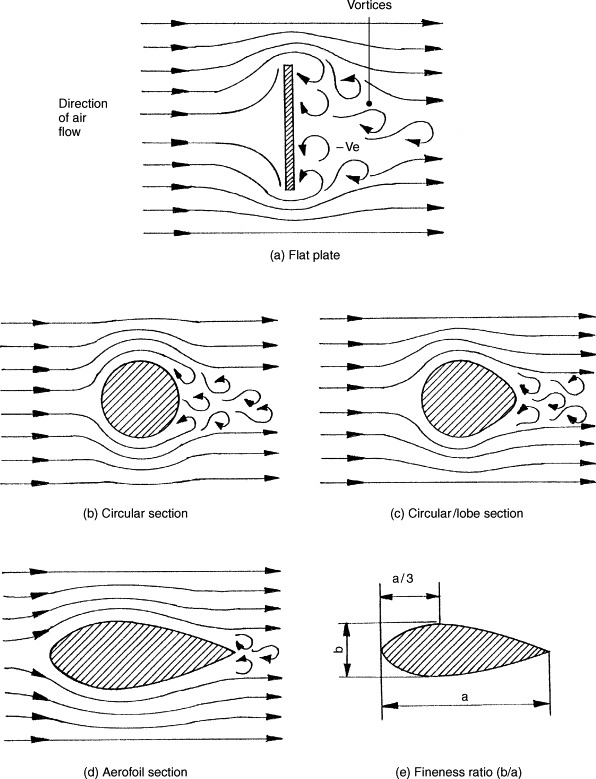
Form drag: Form drag is drag that occurs because of the shape of the airplane itself. The actual shape of the airplane, or any object, will change how incoming air will flow around it. The more streamlined an object, the better the air will flow around it, and the less drag it will endure. That is, a pencil would cut through the air much more cleanly than a huge block. If you threw a cube or a ball across a room, you can imagine how much air would be smacking into the front of it and be forced to go around it, compared to a pencil which barely has to displace the air to travel through it. The more streamlined your plane is, the less form drag it will experience.
Skin Friction Drag
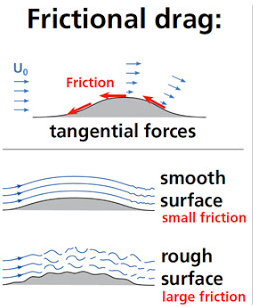
Skin friction drag, or sometimes referred to as friction drag, is caused by the air interacting with the surface of the airplane. This is different from form drag because form drag relates to the overall shape of the airplane, while skin friction drag sort of zooms in on exactly where the air meets the surface of the airplane, which is called the boundary layer. A very smooth material means less skin friction drag, and a rough surface (like a wing with many rivets or screws on it) means more. While it may seem counterintuitive, air is actually a viscous fluid, almost like a syrup. When air flows over a wing, the layer of air directly touching the surface of the wing (the boundary layer) is actually not moving at all. It is basically stopped by the friction of the surface of the airplane itself. The farther up above the surface, the less skin friction drags there is and the faster the air moves. Remember, this layer is only a few millimeters thick, but the air causes enough resistance that it is taken into account when designing planes. The Earth has its own boundary layer, and so does any object that interacts with air.
Interference Drag
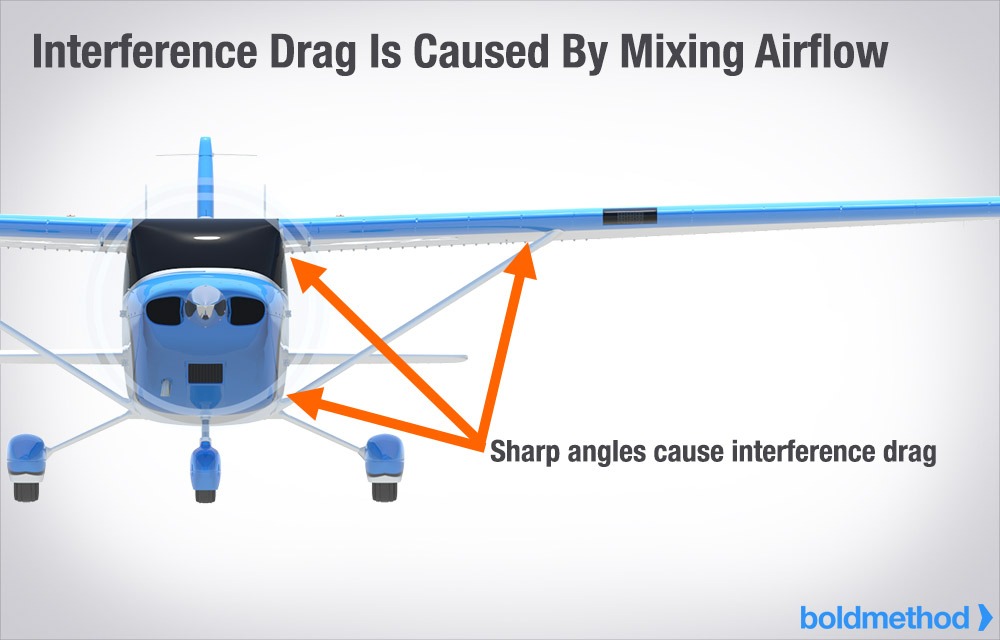
Interference drag is caused when one part of the plane, like the wing, intersects with another part, like the fuselage. There will be some drag where the two parts meet, especially if they meet at a sharp angle. The way to minimize interference drag is with something like a fairing to make the transition from one part of the plane to another much smoother and streamlined.
Induced Drag
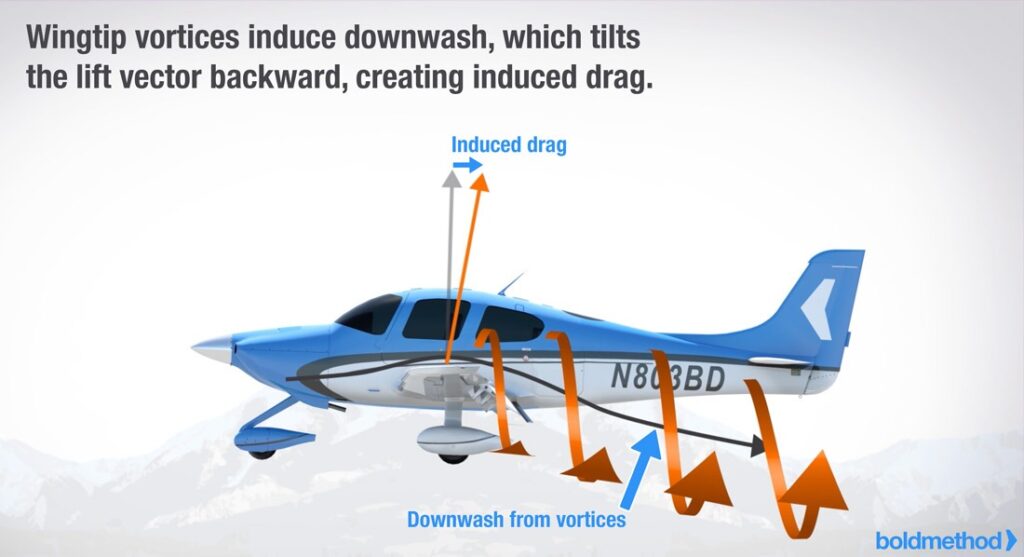
Induced drag is a different type of drag entirely. Everything mentioned above has to do with air colliding with a plane to slow it down, and the different ways it interacts with its surface. Induced drag, however, is a byproduct of lift. When a wing is generating lift, the air on the top of the wing is at a lower pressure than the air on the bottom. Because of this, the high pressure air on the bottom will spill over to the top at the wing tips. This happens the entire time an airplane is in flight, and the constant spilling over produces constant vortices. These vortices sink downwards which creates a downwash on the wing, which moves the lift vector backward, slowing the plane down.
Sources:
https://www.sciencedirect.com/topics/engineering/form-drag
https://www.boldmethod.com/learn-to-fly/aerodynamics/how-interference-drag-affects-your-performance
https://www.boldmethod.com/learn-to-fly/aerodynamics/how-induced-drag-works-with-lift
https://worldofaerospacecom.wordpress.com/2020/07/24/drag/