Angle of Attack
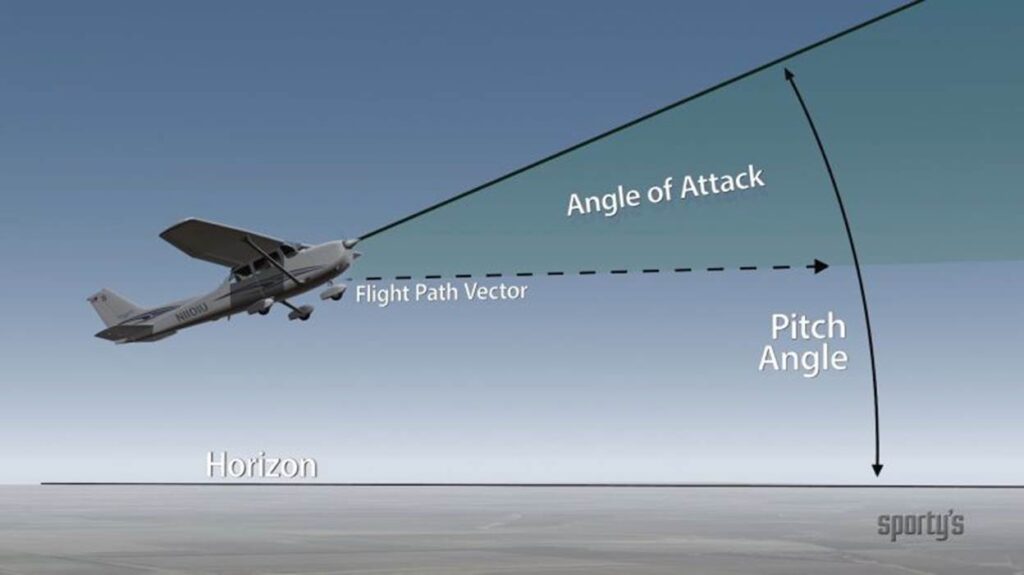
The angle of attack is the angle between an aircraft’s wing (or more specifically the chord line, which is an imaginary line between the leading and trailing edge of a wing) and the relative wind. The angle of attack is one of the most important factors in aerodynamics because it directly affects the amount of lift and drag generated by an airfoil (wing). The higher the angle of attack, the more lift and more drag that is produced.
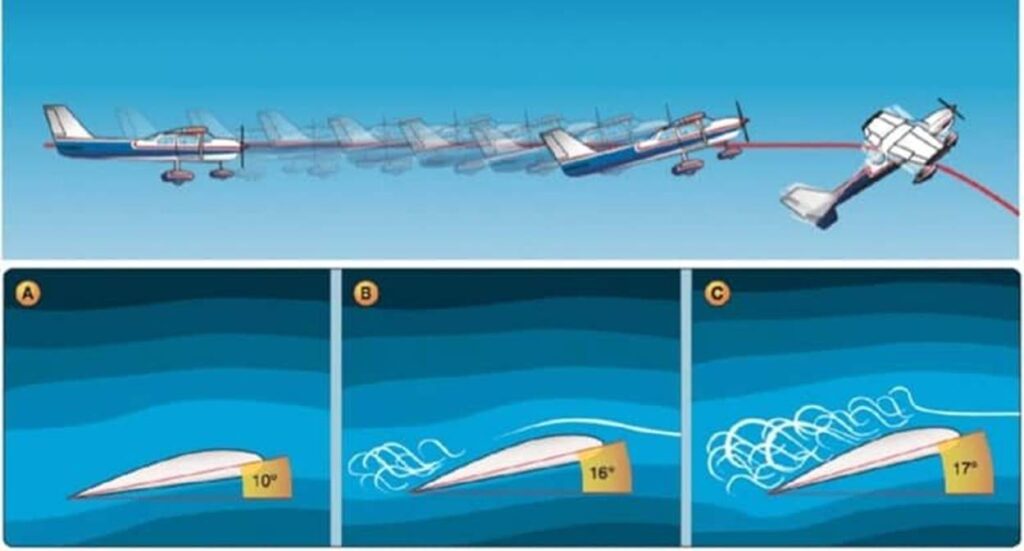
An airfoil will always stall at the same angle of attack, regardless of speed. For a Cessna 172, this is at around 16-18 degrees, depending on the exact make and model. You may have heard that pilots know at which speed their airplane will stall at, however it is a little more complicated than that. Saying that an airplane stalls at a certain speed can be helpful, and it is accurate, but it’s not the full story. Using a Cessna 172 as an example, its stall speed in a clean configuration, meaning the flaps are up and not deployed, is about 44 knots. The reason 44 knots is pretty accurate even though stalling is only related to your angle of attack, is because as you slow down, you will have to keep applying back pressure on the yoke to stop the nose from dropping. The more you slow down, the more you have to keep pulling back to keep the nose up. Lift is decreasing as you slow down, so in order to maintain altitude, you must pull back and increase the angle of attack. As you pull back and the angle of attack gets higher and higher, you will eventually reach the angle of attack where the airplane stalls. 44 knots is going to be where the angle of attack reaches 16-18 degrees, thus you will stall.
Depending on the configuration of your airplane, like the flaps being up or down, or landing gear being deployed if the airplane has them, the stall speed will change. However, the airplane will always stall at the same angle of attack no matter what.
Sources: